Cambridge, MA · Radiology Worklist Intelligence
Why we built Pacslens
Community hospitals represent 85% of US hospital facilities but receive a fraction of radiology AI innovation. We think that's wrong.
The Origin
Started in a reading room, not a boardroom
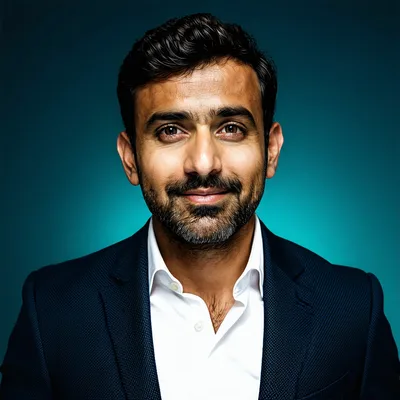
Nikhil Kulkarni trained as a radiologist before completing a master's in machine learning. Working overnight shifts at a community hospital in the Boston area, he noticed that the worklist — 180 studies from 7 PM to 7 AM — was ordered purely by arrival time.
"A subtle LVO on CT head would sit behind 40 routine knee MRIs. That felt wrong — not just operationally, but clinically. Time-to-read matters for stroke outcomes in a way it doesn't for a knee MRI."
He left clinical practice in 2023 to build the triage infrastructure community hospitals never got. The major radiology AI companies were targeting academic medical centers with subspecialty modules — building tools for environments that already had subspecialists. Pacslens is built for the radiologist who reads everything, at night, without backup.
We're an angel-backed company. We don't have a hundred hospital customers. We have a real product, a real clinical problem, and a team that has personally seen what happens when a critical finding sits at position 45 in an arrival-ordered worklist.
Our Values
What we believe
Clinician-first
We build for the radiologist reading at 3 AM, not for the hospital CIO's dashboard. If it doesn't make the radiologist's job clearer or safer, it doesn't ship.
Honest about evidence
We cite published literature. We don't claim clearance we don't have or accuracy we haven't validated. Our evidence page is an honest representation of where the science stands.
Community-focused
We are explicitly NOT building for academic medical centers. That's not our market. Community hospitals are. This focus shapes every product decision we make.
The Team