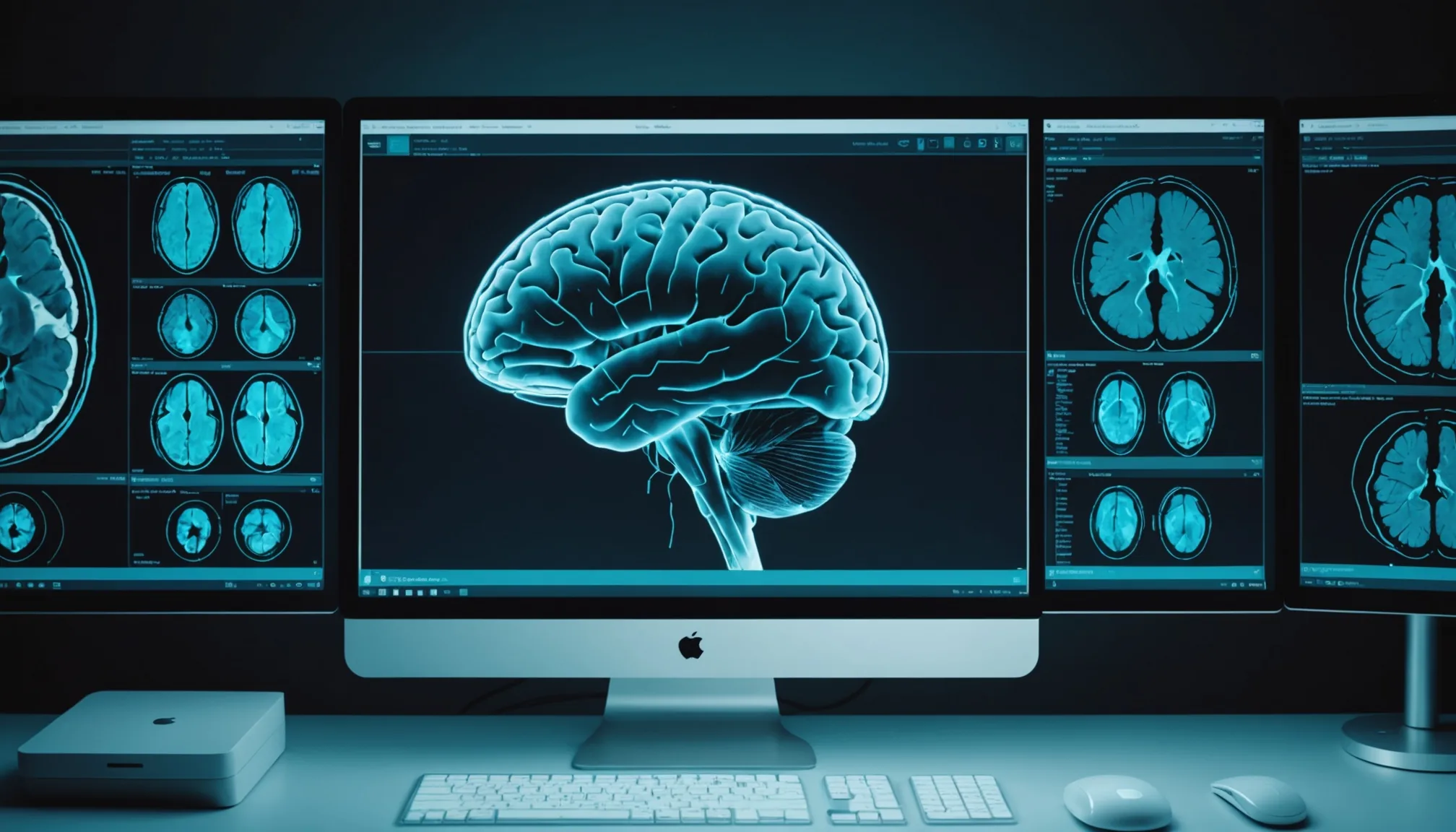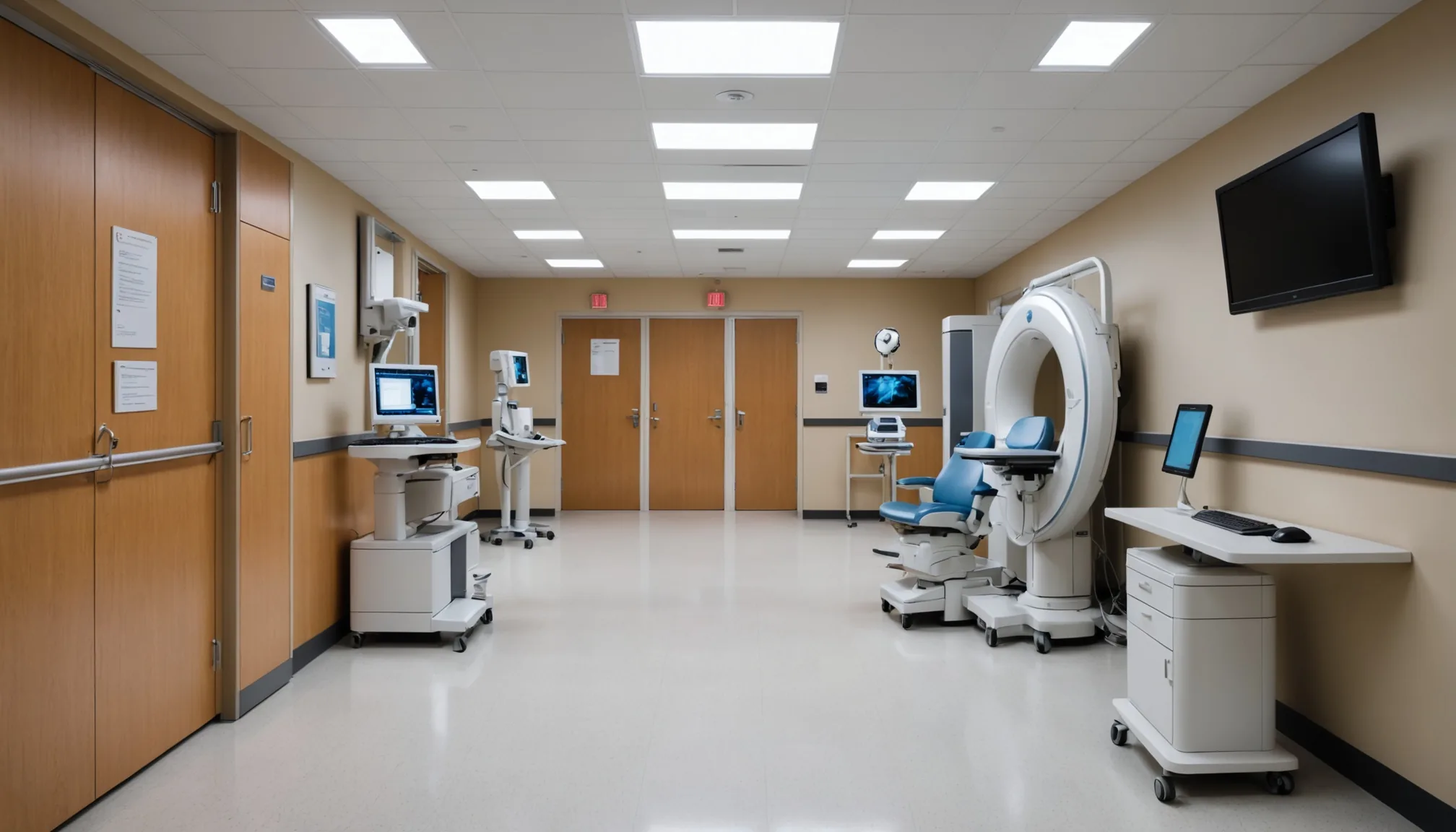
Most AI radiology vendors built their flagship products at or for academic medical centers. In our experience working with community hospital radiology departments, that origin story matters more than any benchmark PDF. The gap between where a model was trained and where it lands is frequently the reason a promising pilot collapses six months in.
Two Departments. Different Planets.
Academic medical centers run subspecialty-structured radiology. A neuroradiologist reads brain MRIs. A chest imager reads pulmonary CTs. Subspecialty reads happen within well-defined modality pools with consistent patient populations, and the department typically employs 30 to 80 radiologists. Fellowship-trained subspecialists mean the AI model's output is validated against a reader who sees 15 to 20 cases per day in one narrow domain.
Community hospitals work differently. One radiologist. All modalities. Chest X-rays, abdominal CTs, MSK MRIs, pediatric ultrasounds, neuro CTAs. Our data shows that community radiologists routinely read across 6 to 9 different body regions in a single shift. That breadth is the job description, not a staffing deficiency.
The models tuned for AMC workflows assume a narrow input distribution. Deploy them in a community setting and the case mix immediately breaks those assumptions.
Imaging Volume and the Wrong Kind of Efficiency
Academic centers can quote average RVU per radiologist and average daily study count with precision, because their billing infrastructure and workforce management systems generate that data automatically. Community hospitals often cannot. Rough benchmarks suggest community radiologists read between 180 and 400 studies per day, but that number swings based on whether overnight teleradiology handles after-hours volume or whether it stays in-house.
Here's the thing: most AI triage tools were validated on AMC datasets where overnight volume is substantial and the case mix is skewed toward complex pathology. Community overnight volume skews toward ED chest X-rays, head CTs for fall patients, and extremity films. An algorithm that learned to flag urgent cases from an AMC trauma center dataset will generate a different false-positive rate in a community setting. Usually higher. And a false-positive rate that adds 40 seconds per case across a 280-study overnight shift adds up fast.
Subspecialty Coverage Gaps Are a Feature, Not a Bug
AMC radiology AI vendors often lead their pitch decks with subspecialty accuracy figures. Sensitivity for intracranial hemorrhage on a neuro-subspecialty read. Specificity for pulmonary nodule on a dedicated chest CT protocol. These numbers are real, achieved in controlled validation conditions with subspecialists as the reference standard.
Community radiologists are generalists by necessity. They do not have a neuroradiology attending on-call at 2 a.m. to confirm an AI-flagged hemorrhage. They are the call. The decision framework is different: the community radiologist needs the AI to help prioritize the worklist and surface studies that require immediate action, not to provide subspecialty-grade diagnostic confidence on a single modality. A tool optimized for the latter use case does not map cleanly onto the former workflow.
We've seen this play out repeatedly: community radiology departments install an AI tool validated at an AMC, train the staff for three days, and then watch adoption drop to near zero within 90 days. Not because the tool is bad. Because the problem it solves is not the problem the community department has.
IT Capacity and the Vendor Integration Reality
Academic medical centers typically run dedicated radiology informatics teams. One or more PhD-level informatics researchers. PACS administrators who have written DICOM conformance statements from scratch. An IT security team that has reviewed medical AI vendor SOC 2 reports before. These teams can absorb a complex vendor integration that requires custom HL7 feed configuration, DICOM routing rule changes, and a six-month UAT cycle.
Community hospitals generally cannot. A community hospital radiology IT environment might be two people: the PACS administrator who also handles the RIS, and whoever in the broader hospital IT team gets assigned when the radiology department raises a ticket. The PACS is often a vendor-managed system running on a support contract with limited local configuration access.
Real talk: if an AI tool requires HL7 v2.x customization to forward specific ORM or OML message types, the community hospital PACS admin may not have done that configuration since the original system install five years ago. Vendor integrations that are routine at AMCs become multi-month blockers at community sites. Time-to-value assumptions break down entirely.
Vendor Constraints and Procurement
Many community hospitals signed 5 to 7 year PACS contracts with major enterprise vendors. Agfa, Sectra, Fujifilm, Intelerad. Those contracts often include preferred vendor clauses or IT security requirements that constrain which third-party AI tools can connect to the PACS environment without formal security review and vendor approval. An AI company that has never been evaluated in that vendor's ecosystem faces a non-trivial procurement and security approval cycle before a pilot can even start.
Academic centers with dedicated informatics teams navigate this routinely. They have done it before with multiple vendors. Community hospitals often approach it for the first time with each new AI tool, creating delays that rarely appear in vendor sales timelines.
Model Selection: What Community Departments Actually Need
The right question is not which AI model has the highest AUC on the published benchmark. The right question is: what does a triage layer need to do in a department where one radiologist is reading everything, overnight IT support is unavailable, and the PACS integration must work without a six-month implementation project?
Based on what we've tracked across community deployments, the criteria that actually predict adoption are:
- Generalist coverage: The model must handle the full case mix, not just the modalities where it has AMC-grade sensitivity. Mediocre performance across 8 modalities beats excellent performance on 2.
- Low integration friction: DICOM-native routing, no HL7 customization required on day one, operational within a standard PACS routing configuration.
- Conservative false-positive tuning: Community case mix is different. Models need validation on community data, not just AMC data, to calibrate alert thresholds appropriately.
- Worklist prioritization, not diagnostic replacement: The value proposition is queue management and urgency surfacing. Not subspecialty-grade AI diagnosis.
Validation Gaps Nobody Advertises
Most FDA-cleared radiology AI tools report sensitivity and specificity from validation datasets drawn heavily or entirely from AMC case archives. This is understandable: AMC archives are large, annotated by subspecialists, and accessible for research. But it means that a tool marketed to community hospitals has almost certainly never been validated on community hospital data. The case mix distribution is different. The referring clinician order patterns are different. The patient population demographics may differ substantially from the AMC validation cohort.
Before a community radiology department selects an AI tool, the right ask is: show me your performance data from community hospital deployments. Not AMC benchmarks. Not academic publications. Community data. Honestly, most vendors will not be able to produce it. That answer tells you something important about whether the tool was designed for you or retrofitted for you.
What This Means in Practice
The community vs. AMC distinction is not a criticism of academic radiology AI. Some excellent tools were built in academic settings and genuinely work well in community deployment. But the deployment context assumptions embedded in those tools, from IT resources to case mix to subspecialty coverage, have to be surfaced and stress-tested before a community hospital commits capital and staff time to a deployment.
Fact: roughly 62% of radiology AI tools currently on the market were validated exclusively on AMC or AMC-adjacent data. For community hospital radiology leadership evaluating vendors, model selection starts with the validation data question, not the AUC number.
The chief radiologist at a 200-bed community hospital and the radiology department chair at a 900-bed academic center are both good at their jobs. They just need different tools.
Pacslens was built specifically for community hospital radiology. Request a demo to see how triage prioritization works in a real community deployment.