The dominant commercial logic in radiology AI has always been vertical: build a detector for one high-acuity finding, get FDA 510(k) clearance for it, sell to hospitals that want that finding caught faster. Aidoc built its first cleared product around intracranial hemorrhage (K183327). Viz.ai launched on large vessel occlusion detection (K193482). RapidAI's flagship is ICH with hemorrhage volume quantification (K203804). Each of these represents a real clinical need, and each cleared device is backed by published peer-reviewed validation.
But the model leaves a gap that community hospitals feel acutely. When you buy a single-finding detector, you've committed capital and integration effort to one indication. The ICH detector fires on ICH. It doesn't touch the PE case that came in twenty minutes earlier, or the pneumothorax hiding at position forty on the overnight worklist.
The Tyranny of the Arrival-Time Queue
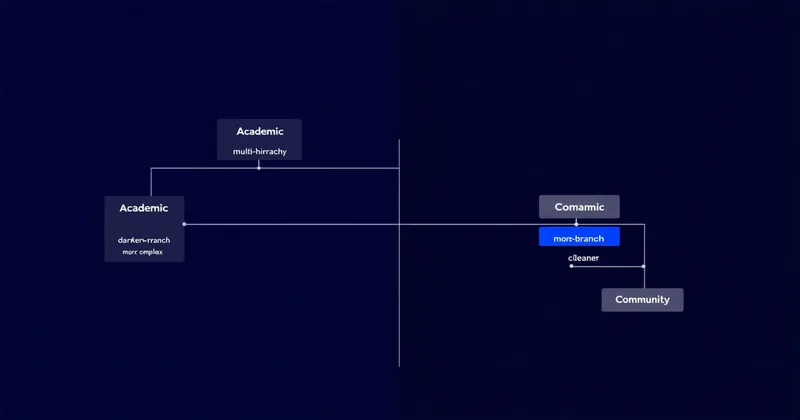
Community hospitals operate radiology departments that look nothing like academic medical centers. A facility with four radiologists — two during the day, one overnight — cannot staff subspecialty coverage for each modality or indication. The radiologist covering overnight reads everything: CT head, CT chest PE protocol, CT abdomen, MRI brain, chest X-ray, spine CT, mammography callbacks. The worklist runs on arrival time, with STAT orders manually flagged by technologists who themselves are triaging across competing demands.
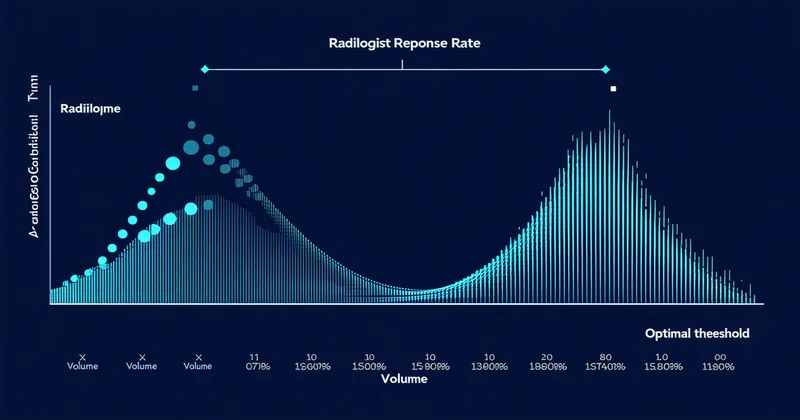
Consider a plausible scenario: a 280-bed community hospital in the mid-Atlantic region, running approximately 170 CT studies overnight on a busy shift. That queue, sorted by arrival time, contains an LVO-protocol CTA that arrived at 11:14 PM — behind 34 other studies ordered earlier in the shift. The overnight radiologist works through routine follow-up knees and serial chest CTs, unaware that the LVO study is queued at position 35. Without active triage, there is no mechanism to surface it faster unless a nurse or ED physician physically calls the reading room.
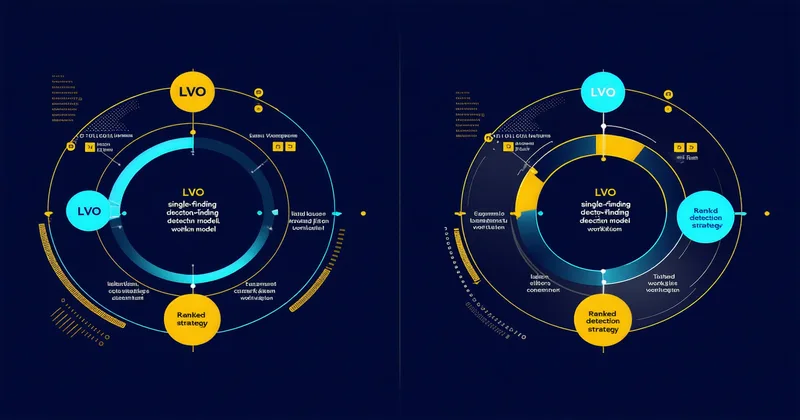
Single-finding detectors solve part of this problem: if the hospital has deployed an LVO detector, that study gets flagged. But if the same hospital hasn't deployed a PE detector, or an ICH detector, or a pneumothorax tool, those studies still wait in the queue. And at many community hospitals, the IT overhead, the capital cost, and the clinical validation burden of deploying four or five separate point-solution detectors is prohibitive.
What Worklist Intelligence Actually Means
Worklist intelligence — the approach Pacslens takes — treats the queue itself as the unit of optimization, not the individual finding. Instead of asking "did this study contain an LVO?", a worklist-level system asks "given everything in this queue right now, which studies should the radiologist read first?" The distinction matters architecturally and clinically.
Architecturally, the system must ingest all studies across all modalities via DICOM C-STORE, run multi-indication triage scoring on each, and then synthesize those scores into a prioritized ranking that re-ranks the RIS worklist. That ranking then surfaces via HL7 FHIR ImagingStudy resource updates or via HL7 v2 ORM extensions, depending on what the RIS supports. The radiologist opens their viewer — whether it's Sectra IDS7, GE Centricity, or Fujifilm Synapse — and sees the worklist already sorted with triage priority indicators at the top.
Clinically, the difference is that no single high-acuity finding type is privileged by the deployment decision. If the hospital has a higher-than-average PE burden because it serves an older population, the system doesn't require a separate PE module procurement. PE studies are scored alongside LVO, ICH, pneumothorax, and aortic dissection findings. The ranking reflects the actual criticality mix of that shift.
The Trade-off: Depth vs. Breadth
We're not saying single-finding detection is the wrong approach for every environment. For a large academic stroke center processing 50 CTA-Head studies daily and operating a dedicated stroke team, a highly tuned LVO detector with subspecialty-validated thresholds is exactly right. Viz.ai K193482, for instance, integrates deeply with stroke code workflows — calling phone trees, paging neurointerventionalists, logging door-to-needle intervals. That depth of integration is valuable in an environment that has the clinical infrastructure to act on it.
The trade-off is specificity for breadth. A single-indication system can be tuned with fine-grained thresholds, validated on large indication-specific cohorts, and cleared for a narrow device description that FDA reviewers can examine carefully. A worklist-level system must maintain acceptable performance across multiple indication categories simultaneously, and must define its device description and cleared indications accordingly.
For community hospitals, where overnight staffing is thin and the case mix is heterogeneous, breadth tends to be more valuable than depth at any one indication. The question isn't "what's the best LVO detector?" — it's "how do I make sure the most critical study in tonight's queue gets read before the third routine knee?"
Integration Surface: Why Worklist-Level Is Also More Complex
Deploying worklist intelligence requires more integration surface than deploying a single-finding detector. A point-solution typically integrates via DICOM C-STORE (receiving studies routed from PACS) and outputs either a push notification to a mobile app or a DICOM Structured Report (SR) stored back to PACS. The integration team configures a routing rule in the PACS and validates that alerts arrive. Done.
Worklist re-ranking requires all of that plus a downstream connection to the RIS. The system must write priority indicators somewhere that the radiologist's workflow actually surfaces — either via FHIR ImagingStudy updates to an Epic Radiant integration, via Cerner RadNet HL7 v2 ORM extensions, or via a custom worklist API if the PACS has one. That's a second integration point, with its own testing and validation overhead.
The counterargument is that this integration surface is a one-time cost that then benefits every indication. Compare: deploying five separate point-solution detectors each requires its own DICOM routing configuration, its own alert delivery mechanism, its own threshold calibration, and potentially its own vendor relationship and support contract. The aggregate integration complexity of five single-finding systems likely exceeds that of one well-designed worklist system — but it arrives piecemeal, which makes it feel more manageable.
How the Evidence Base Maps to Each Strategy
Single-finding detection has a richer published evidence base because it's been at market longer and with FDA clearance. Viz.ai LVO detection has published sensitivity/specificity data from prospective studies (Stroke, 2021). Aidoc's ICH detection has been evaluated in multiple NEJM-adjacent publications examining time-to-read outcomes. The cleared device descriptions give FDA reviewers a defined predicate device to compare against.
Worklist-level triage occupies an earlier evidence position. The concept is well-supported by the broader AI triage literature — published in journals including Radiology, JACR (Journal of the American College of Radiology), and NEJM Evidence — but the specific performance characteristics of a combined multi-indication triage ranker are still being established prospectively in the community hospital setting. Pacslens is pursuing 510(k) submission for selected indications under 21 CFR Part 892, referencing cleared predicate devices including Aidoc (K183327) and Viz.ai (K193482) for the relevant indication sub-components.
This means community hospitals evaluating Pacslens today should expect pilot program engagement, evidence accumulation, and honest performance reporting — not claims of cleared-device deployment equivalence. That's the honest position for an early-stage radiology AI vendor building in the community hospital segment.
What This Means for Hospital Procurement Decisions
The strategic question for a community hospital evaluating radiology AI is not "which finding should we detect first?" but "what is the actual bottleneck in our overnight workflow, and what does fixing it require?" If the bottleneck is genuinely about one critical finding type — a hospital with a known LVO volume challenge due to proximity to a stroke population — a cleared single-finding system may be the right first step. If the bottleneck is the worklist queue itself, and the case mix is heterogeneous, worklist intelligence is a better match.
Neither architecture is inherently superior. The right question is fit to clinical environment, integration complexity budget, and evidence tolerance. Community hospitals with small IT teams and heterogeneous overnight case mixes are the environment where worklist-level triage has the strongest operational argument. That's why it's the bet Pacslens is making — and it's a bet we're making openly, not as a claim of superior sensitivity on any single indication.
Interested in how worklist-level triage would work in your PACS environment? Request a walkthrough or contact us with your RIS vendor and study volume.