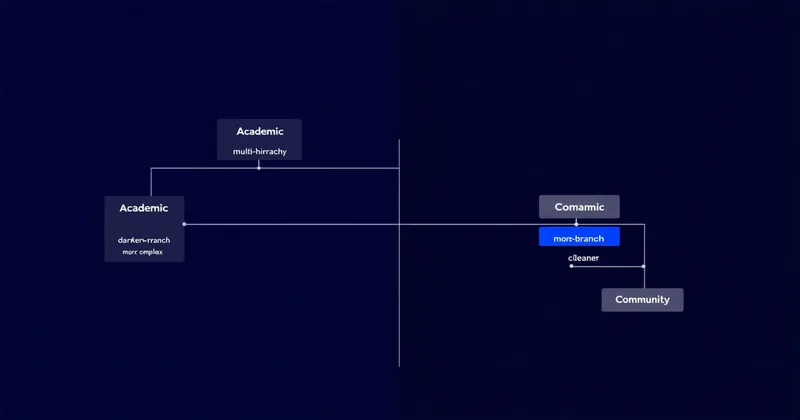
Walk into the radiology reading room at an academic medical center and you are likely to find subspecialty coverage for every modality — a dedicated neuroradiologist, a thoracic radiologist, a musculoskeletal subspecialist, and quite possibly a faculty member with protected time for AI research and evaluation. The PACS administrator has ten years of experience with the institution's Sectra or Philips IntelliSpace system. The IT department includes a clinical informatics team that manages Epic Bridges integrations for a living. The AI governance committee meets quarterly to review new tool evaluations against a written procurement framework adapted from ACR AI-LAB.
Now walk into the radiology reading room at a 180-bed community hospital in rural Pennsylvania at 11 PM. There is one radiologist — a teleradiologist contracted from a regional group, reading remotely, covering this hospital plus two others simultaneously. The PACS is a mid-generation Fujifilm Synapse installation maintained by the hospital's three-person IT team, who were also troubleshooting the EMR billing interface and the parking gate software today. There is no AI governance committee. There is no clinical informatics team. There is a radiology department administrator who manages scheduling, billing, and vendor contracts with the help of two staff members.
These are not two different sizes of the same problem. They are different problems entirely, and they require different radiology AI procurement approaches.
What Academic Medical Centers Have That Community Hospitals Don't
Subspecialty Staffing and Targeted AI Deployment
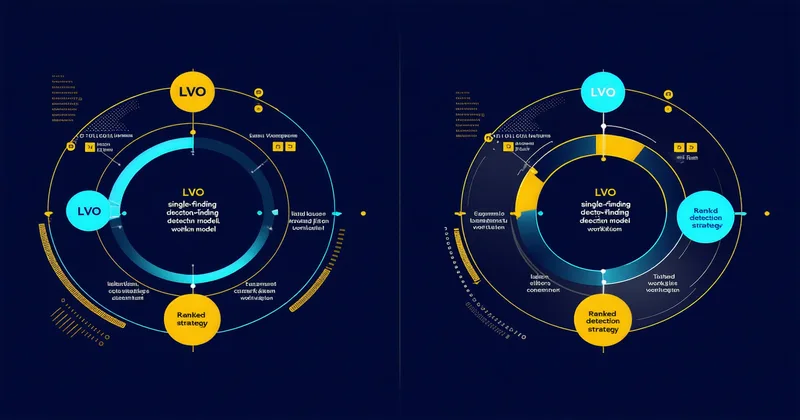
Academic medical centers can deploy single-indication AI tools optimally because they have subspecialty radiologists to configure, validate, and interpret the output within their specialty context. A neuroradiology-specific LVO detection system (Viz.ai K193482) deployed at a stroke center with a dedicated stroke team makes complete sense — the tool's alerts integrate with the stroke code workflow, the neuroradiologist validates the AI flags within their specialty expertise, and the clinical operations team has a well-defined pathway from AI alert to catheterization lab activation.
Community hospitals have general radiologists who cover everything. Deploying five different single-indication tools — each with its own alert mechanism, its own threshold configuration, its own vendor relationship — and expecting a general radiologist covering three facilities overnight to manage all of them coherently is not a realistic deployment model.
IT Resourcing for Integration
Academic medical center enterprise deployments of radiology AI typically involve dedicated PACS administrators who configure DICOM routing, clinical informatics staff who manage HL7 interface mapping in Epic Bridges or Cerner's integration engine, and often a project manager who coordinates the implementation timeline. The vendor's implementation team has an experienced counterpart on the hospital side who understands the technical environment deeply.
Community hospitals typically have IT generalists who know their systems but have never deployed a DICOM-routing radiology AI application before and don't have bandwidth to manage an 18-month implementation project alongside everything else they support. An AI vendor whose deployment process requires extensive custom PACS configuration or complex HL7 interface development is poorly matched to this environment, regardless of how good the clinical product is.
Procurement and Contract Cycles
Academic medical centers negotiate enterprise software contracts through formal RFP processes, legal review, and multi-year enterprise agreements with volume-based pricing and SLA provisions. These contracts take 12–18 months from initial vendor engagement to signed agreement and are designed for the vendor's scale and the institution's enterprise procurement infrastructure.
Community hospital procurement is usually a department-level decision made by the radiology director or CMO with CFO sign-off, on timelines of three to six months, with contracts structured for annual renewal rather than multi-year lock-in. A vendor whose minimum contract term is three years with a $500,000 annual commitment is structurally inaccessible to most community hospitals regardless of clinical fit.
What Community Hospitals Actually Need from Radiology AI
The unmet need in community hospital radiology is not subspecialty-level performance on a single high-acuity finding type. It is baseline risk stratification of a heterogeneous overnight queue by a system that requires minimal ongoing maintenance and produces a result that is visible in the existing workflow without training the radiologist to use a new interface.
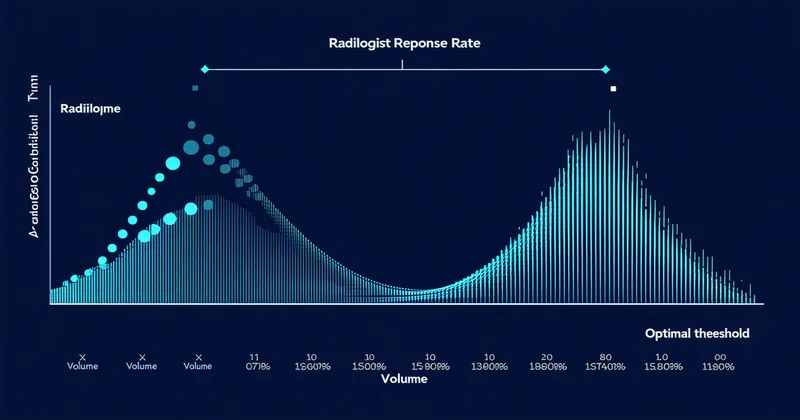
Consider a plausible scenario: a 160-bed community hospital in Vermont running approximately 120 overnight CT studies on an average shift, covered by a single teleradiologist. The case mix is roughly: 40% CT head (including head trauma, altered mental status, headache, and routine 24-hour ICH follow-ups), 20% CT chest (including PE protocol, trauma, pneumonia, and pleural effusion), 15% CT abdomen/pelvis, and 25% other modalities. The overnight radiologist is reading in arrival-time order, which means a subtle ICH buried at position 30 in the queue may not be read for 90 minutes after acquisition.
What this environment needs is a system that ingests all DICOM studies as they arrive via C-STORE, runs multi-indication triage scoring (ICH, LVO, PE, pneumothorax, aortic dissection), and re-ranks the Fujifilm Synapse worklist so the highest-risk studies appear at the top — all within 60 seconds of study arrival, without requiring the radiologist to interact with any system other than their existing PACS viewer. That is the workflow-fit requirement, and it is different from the subspecialty alert integration that academic medical centers are designed to support.
The IT Deployment Reality Check
For a community hospital IT team evaluating radiology AI, the critical integration questions are fundamentally about maintenance burden, not just initial setup. Setting up a DICOM routing rule to forward studies to an AI system is a half-day task for a competent PACS administrator. But what happens six months later when the PACS vendor releases a software update that changes the AE title handling? Who monitors the AI processing pipeline for failures? Who handles a case where studies are no longer being forwarded due to a configuration change made by someone who didn't know the AI routing rule was there?
These are not edge cases — they are normal operational realities in any PACS environment. A radiology AI vendor whose deployment model requires the hospital IT team to actively monitor and maintain the integration is a poor fit for a three-person IT department. The operational model that works in community hospitals is one where the AI vendor monitors the data pipeline, alerts the hospital IT team when studies stop arriving, handles model updates remotely without requiring hospital-side action, and provides a simple dashboard showing pipeline health without requiring a clinical informatics expert to interpret.
Evidence Expectations and the Pilot Approach
Academic medical centers can run formal internal validation studies for newly deployed AI tools — pulling a de-identified holdout cohort, having subspecialty radiologists adjudicate ground truth, generating institution-specific sensitivity/specificity data. Community hospitals cannot routinely do this. They don't have the informatics infrastructure, the protected radiologist time, or the data governance team to run internal validation studies.
This doesn't mean community hospitals should deploy radiology AI without any performance validation. It means the validation model has to be different: a structured pilot period during which the AI vendor tracks alert volume, processing failure rates, and — in collaboration with the radiology department — a periodic sample review of high-scored cases to confirm that the triage rankings are clinically plausible. The vendor bears more of the validation burden in the community hospital model; the hospital contributes by flagging cases where the triage ranking felt wrong.
We're not saying academic medical center deployment models are wrong for their environment. We're saying that the vendor selection, integration approach, contract structure, and evidence evaluation process that works for an academic medical center is the wrong template for a community hospital making a radiology AI decision. Applying enterprise academic norms to a 180-bed community hospital procurement leads either to a failed deployment or to a community hospital spending resources it doesn't have on infrastructure it doesn't need.
The radiology AI vendors who are building for the community hospital segment are making different design choices — simpler deployment, lower IT overhead, multi-indication triage rather than subspecialty deep-dives, pilot-first contract structures — because those choices are required by the environment, not because they're compromises on quality.
If you're a community hospital radiology director evaluating your options, talk to our clinical partnerships team about what a pilot program looks like for your specific PACS environment and study volume.